Autumn Fall Bicycle Seamless Pattern: A Practical Guide for Creators and Designers
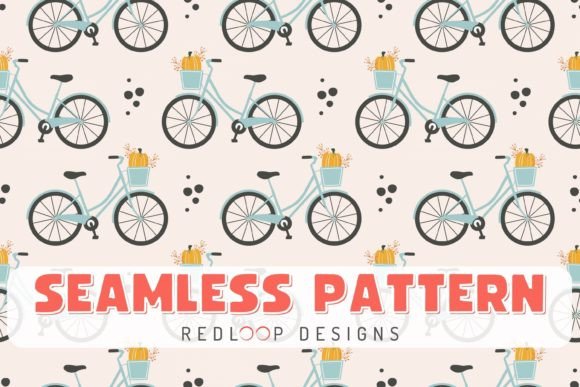
The transition into cooler weather often inspires a wave of creative energy, particularly among designers looking to capture the cozy, nostalgic essence of the season. One design element that consistently resonates with audiences is the Autumn Fall Bicycle Seamless Pattern. This specific visual motif combines the rustic charm of fall foliage with the timeless appeal of cycling, creating a versatile asset for a wide range of projects. Whether you are a small business owner preparing holiday inventory or a blogger seeking to refresh your site’s aesthetic, understanding how to properly utilize this pattern can significantly elevate your final output.
However, simply downloading a graphic file is not enough to guarantee success. Many creators overlook critical technical specifications and application nuances, leading to blurry prints, wasted materials, or inconsistent branding. By examining the common pitfalls associated with using seamless patterns like the Autumn Fall Bicycle design, you can ensure your projects look professional and polished from start to finish.
Understanding the Asset: What Makes This Pattern Valuable?
An Autumn Fall Bicycle Seamless Pattern is more than just a pretty image; it is a repeating tile designed to cover surfaces without visible seams. The "seamless" aspect is crucial because it allows the design to wrap around objects or fill large backgrounds continuously. When paired with the warm color palette typical of autumn—think burnt oranges, deep reds, mustard yellows, and earthy browns—the bicycle motif adds a sense of movement and lifestyle appeal.
This combination is particularly effective for products that benefit from a narrative feel. For instance, a notebook cover featuring this pattern suggests a journey or a daily commute, while a website background might evoke a sense of community and outdoor activity. The versatility of this theme means it appeals to a broad demographic, including students, commuters, fitness enthusiasts, and anyone who appreciates seasonal decor.
Technical Specifications Matter
Before diving into applications, it is essential to verify the technical integrity of the file you intend to use. High-quality digital assets typically come with specific metadata that dictates their usability. For example, a premium version of this pattern might be provided as a JPEG File in RGB at 300 DPI, measuring 12 x 12 inches (3600 x 3600 pixels).
These numbers are not arbitrary. They represent the industry standard for high-resolution printing. Understanding these specs helps you determine whether a file is suitable for your intended medium. A 3600-pixel width ensures that even when scaled up for larger formats, the image retains its sharpness. If you encounter files with lower resolution, such as those optimized only for web display (72 DPI), they will appear pixelated or blurry when printed on fabric or paper.
Common Mistakes in Application and Usage
Even with a high-quality asset, errors can occur during the implementation phase. Below are frequent missteps that creators make when working with seamless patterns, along with strategies to avoid them.
Ignoring Color Mode Differences
One of the most significant errors involves mismatching color modes. Digital screens use RGB (Red, Green, Blue) color space, which produces vibrant colors by emitting light. However, physical printing processes use CMYK (Cyan, Magenta, Yellow, Key/Black), which relies on ink absorption. While many modern print-on-demand services handle the conversion automatically, relying solely on automatic tools can sometimes result in muted or shifted colors, particularly in complex gradients found in fall-themed designs.
Advice: Always check if your printing provider requires CMYK files. If so, convert your JPEG before uploading. Additionally, request a physical proof sample before committing to a large batch order to ensure the autumn tones match your vision.
Overlooking Scale and Proportion
A seamless pattern repeats infinitely, but the scale of the repeat unit matters. If the bicycle and leaf motifs are too small relative to the product size, they may disappear visually or create a muddy texture. Conversely, if the pattern is too large, it might dominate smaller items like business cards or keychains, leaving insufficient room for text or logos.
Advice: Preview the pattern at actual size whenever possible. Most design software allows you to set the canvas dimensions to match your final product. Test the pattern on different item sizes—from a mug sleeve to a tote bag—to see how the bicycle elements interact with the shape of the object.
Misapplying Patterns to Non-Fabric Substrates
While the Autumn Fall Bicycle Pattern is excellent for textiles, not all substrates accept ink or dye in the same way. Fabric prints require specific ink types (such as sublimation ink) to bond correctly with fibers. Applying a design meant for cotton to polyester without verifying compatibility can lead to fading or cracking after washing.
Advice: Research the material requirements of your chosen Print on Demand platform. Some platforms specialize in certain materials, while others offer broader ranges. Ensure your file format (JPEG) is supported by the platform’s upload system and that the DPI meets their minimum thresholds.
Diverse Applications Beyond Standard Merchandise
The utility of this pattern extends far beyond simple t-shirts. Its adaptability makes it a valuable tool for various professional and personal projects.
- Branding and Stationery: Use the pattern as a subtle background for business cards, brochures, or letterheads. The repetitive nature of the design can add texture without overwhelming the primary text. It works particularly well for businesses related to education, travel, or eco-friendly products.
- Digital Content Creation: Bloggers and marketers can use the pattern for featured images, social media headers, or email newsletter backgrounds. The RGB format ensures it looks crisp on monitors and mobile devices.
- Crafting and DIY Projects: For hobbyists using cutting machines like Cricut or Silhouette, this pattern can be used for decoupage, scrapbooking, or creating custom vinyl decals. The high resolution ensures clean cuts and detailed edges.
- Home Decor and Wall Art: Large-scale prints of the pattern can serve as striking wall art or wrapping paper for gift-giving occasions. The seamless nature allows for easy tiling in photo editing software to create panoramic prints.
Evaluating Quality Before Purchase or Download
When selecting an Autumn Fall Bicycle Seamless Pattern, do not rely solely on the thumbnail preview. Zoom in to inspect the clarity of the bicycle details and the smoothness of the leaf textures. Check for compression artifacts, which appear as blocky distortions in areas of solid color. A high-quality JPEG should remain smooth even at higher zoom levels.
Furthermore, consider the licensing terms. Are you allowed to use the pattern for commercial resale? Some licenses restrict usage to personal projects only, which could lead to legal issues if you sell printed goods. Always read the fine print to ensure compliance.
Final Thoughts on Integration
Successfully integrating an Autumn Fall Bicycle Seamless Pattern into your workflow requires attention to detail, from technical specifications to practical application. By avoiding common mistakes related to color mode, scale, and substrate compatibility, you can produce high-quality results that resonate with your audience. Whether you are enhancing a brand identity, creating handmade crafts, or designing digital content, this pattern offers a charming and versatile solution for capturing the spirit of the season. Take the time to prepare your assets correctly, and your designs will stand out for all the right reasons.