Business Card Order Form,HR Templates
In an era where digital networking often overshadows physical interactions, the humble business card remains a critical touchpoint for professional identity. However, the process of acquiring these tangible representations of one’s brand has evolved from casual exchanges to structured corporate procurement. This shift highlights the importance of standardized documentation, specifically the Business Card Order Form, HR Templates. These forms are not merely administrative hurdles; they are essential tools that bridge the gap between individual creative expression and organizational compliance, ensuring that every printed card aligns with company standards while streamlining internal workflows.
The modern workplace is characterized by rapid change and distributed teams. Professionals, entrepreneurs, and marketers frequently find themselves in situations where immediate access to contact materials is necessary, yet resources must be managed carefully. Without a centralized system, requests for business cards can become chaotic, leading to inconsistent branding, budget overruns, or delays in distribution. By utilizing a dedicated Business Card Order Form Editable MS Word HR Templates Human Resources Forms Employment Template Employee Documents Business Card Order, organizations can impose a level of order on this process. It transforms a potentially ad-hoc request into a documented, trackable event that respects both the employee’s needs and the company’s operational policies.
The Evolution of Professional Identity Management
Gone are the days when handing out a stack of cards was as simple as grabbing them from a desk drawer. Today, brand consistency is paramount. A marketing manager at a tech startup and a senior engineer at a financial firm may have vastly different design requirements, but both need their information presented accurately and professionally. The introduction of editable templates in Microsoft Word has democratized access to high-quality document management. Previously, creating such forms required graphic design skills or reliance on IT departments. Now, any HR professional or office manager can customize a Business Card Order Form to fit specific organizational hierarchies and approval processes.
This evolution reflects a broader trend in human resources: the move toward self-service and transparency. Employees expect clear guidelines and easy-to-use tools to manage their professional assets. When an organization provides a well-designed form, it signals that it values efficiency and supports its workforce. Conversely, a lack of structure can lead to frustration, with employees spending unnecessary time chasing approvals or correcting errors in their designs. The Editable MS Word Document format is particularly advantageous because it allows for manual filling via computer or print-and-sign methods, accommodating various technological comfort levels within diverse teams.
Streamlining Communication and Reducing Friction
One of the most significant benefits of using a structured order form is the elimination of back-and-forth communication. In traditional settings, ordering business cards might involve emailing multiple people, clarifying font sizes, confirming paper types, and waiting for verbal approvals. This fragmentation creates bottlenecks and increases the likelihood of errors. A comprehensive Human Resources Forms Employment Template consolidates all necessary information into a single interface.
By requiring customers to provide their contact information, design specifications, and other details upfront, the form ensures that the printing company—or the internal printing department—has everything needed to proceed without further clarification. This approach not only speeds up production but also enhances accuracy. For instance, specifying the exact layout, color codes, and finish options directly on the form prevents misunderstandings that could result in costly reprints. For freelancers and small business owners who wear many hats, this efficiency translates directly into time saved, allowing more focus on core business activities rather than administrative logistics.
Key Components of an Effective Order Form
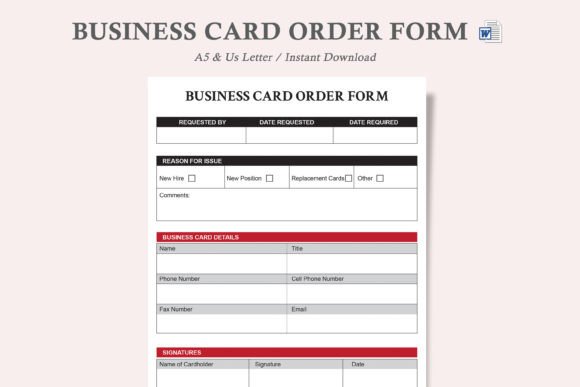
To understand why these templates are so effective, it is helpful to examine the specific sections they contain. A robust Business Card Order Form, HR Templates includes fields that serve distinct purposes, from identification to authorization. Below is a breakdown of the critical elements typically found in these documents:
- Requested by: This field identifies the individual initiating the request. In larger organizations, this helps HR track usage patterns across departments and ensure that orders are legitimate.
- Date requested and Date Required: Establishing a timeline is crucial for managing expectations. It allows the HR department or vendor to prioritize orders based on urgency and availability.
- Reason for request: Whether it is a new hire, a role change, or a replenishment of stock, documenting the reason provides context. It helps justify the expense during audits and ensures that resources are allocated appropriately.
- Business card details: This is the core of the form, where users specify text, images, layout, and material preferences. Clear instructions here prevent design errors and ensure brand alignment.
- Signatures: Authorization is key in corporate environments. The inclusion of signature lines adds a layer of accountability and formal approval.
These components work together to create a complete record. The cardholder signature confirms that the individual agrees to the design and cost implications, while the supervisor signature validates the business necessity of the request. This dual-signature requirement is a common control mechanism in HR practices, preventing unauthorized expenditures and maintaining budgetary discipline.
Practical Implications for Modern Workflows
For professionals aged 20 to 50, who span generations from digital natives to seasoned veterans, the flexibility of these templates is invaluable. Younger workers may prefer filling out the form digitally, attaching design files directly, and submitting it via email. Older colleagues might appreciate the option to print the form, hand-write their details, and scan it for submission. The Editable MS Word format supports both approaches, making it a versatile tool for inclusive workplaces.
Moreover, these forms serve as important documentation backups. In the event of a dispute regarding branding guidelines or budget allocation, the signed form provides concrete evidence of what was approved and by whom. This is particularly relevant for remote teams or hybrid work models, where face-to-face conversations are less frequent. Having a paper trail—or a digital equivalent—that clearly outlines the request and approval process reduces ambiguity and fosters trust between employees and management.
Note to Turn Into HR Department for Ordering
A specific instruction often included in these templates is a note directing the user to submit the completed form to the HR Department. This step reinforces the centralization of the process. HR acts as the gatekeeper for company resources, ensuring that external vendors are vetted and that internal costs are monitored. By routing all requests through HR, companies can negotiate bulk printing rates, maintain a consistent supplier relationship, and ensure that all printed materials meet legal and ethical standards.
Adapting to Changing Market Preferences
As sustainability becomes a growing concern for consumers and businesses alike, the business card industry is adapting. Many companies are now opting for eco-friendly papers and soy-based inks. An effective Business Card Order Form should include options for these sustainable choices, allowing environmentally conscious professionals to make responsible decisions. This feature not only caters to market preferences but also enhances the company’s public image as a socially responsible entity.
Additionally, the rise of digital alternatives, such as QR code-enabled cards or NFC chips embedded in physical cards, is influencing how these forms are designed. Modern templates may include fields for linking digital portfolios or social media profiles, reflecting the hybrid nature of contemporary networking. By staying updated with these trends, organizations can ensure that their business cards remain relevant and functional in a rapidly changing digital landscape.
Conclusion
The Business Card Order Form, HR Templates represents more than just a piece of paperwork; it is a strategic asset in managing professional identity and organizational efficiency. By providing a clear, structured, and flexible method for requesting customized business cards, these forms reduce friction, enhance brand consistency, and support sound financial practices. Whether used by large corporations or small startups, the ability to edit and customize these templates in MS Word empowers HR departments and employees alike to navigate the complexities of modern business communication with ease. As we continue to adapt to new technologies and changing work habits, the importance of reliable, well-designed documentation will only grow, making tools like these indispensable for any forward-thinking organization.